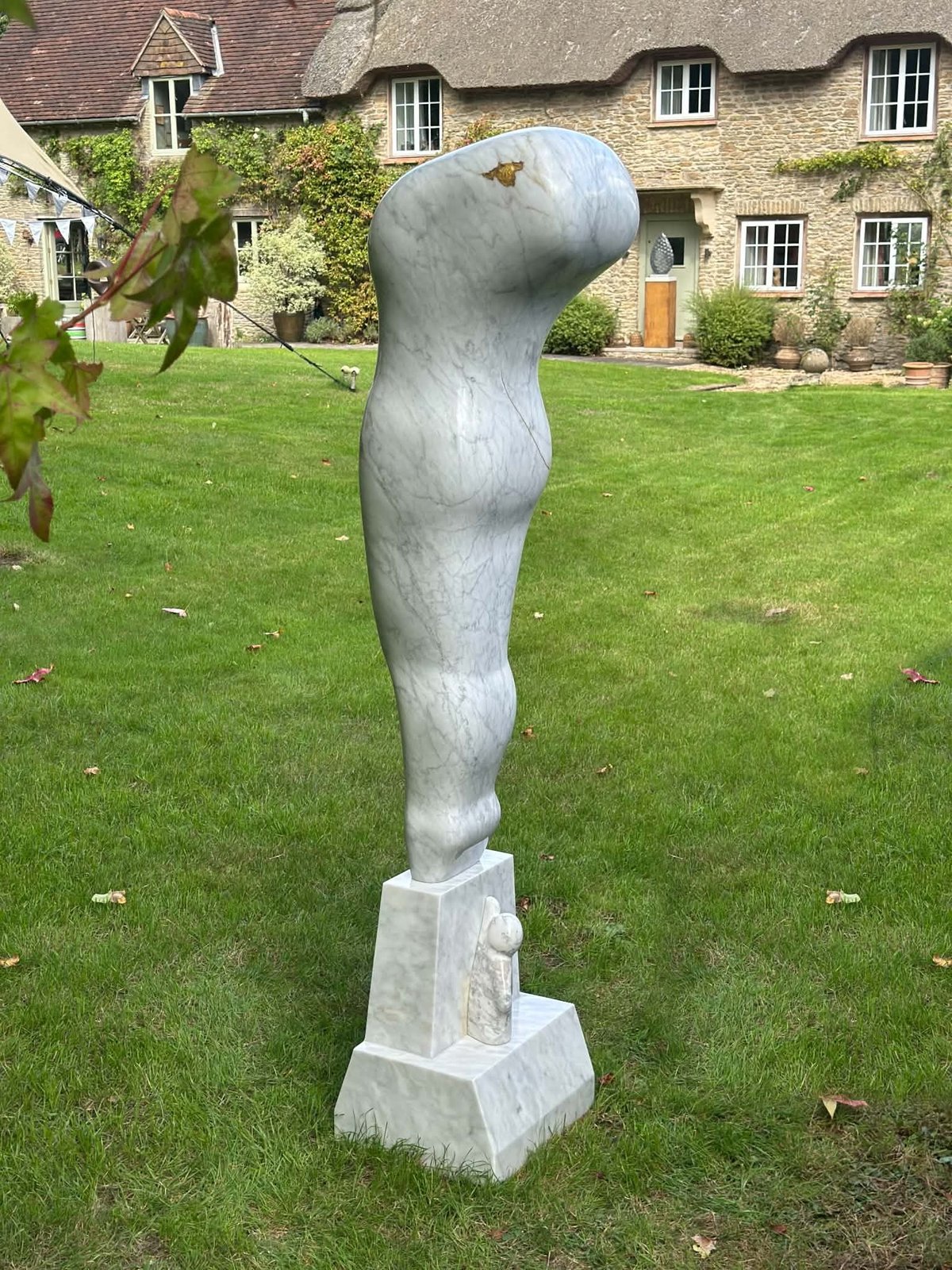
The safe way to clean marble garden statues is with clean water, a soft brush and, if needed, a little pH-neutral soap, followed by a thorough rinse and time to dry. Marble is sensitive to acids and abrasion, so the gentlest method that works is always the right one. Harsh cleaners can etch the surface quickly, and that damage cannot be undone.
Why marble needs a gentle hand
Marble is made largely of carbonate minerals, chiefly calcite, which react with acids. Vinegar, lemon juice and many descaling and bathroom cleaners are acidic and will etch the surface, leaving dull marks that cleaning cannot remove. Abrasive pads, wire brushes and scouring powders scratch it.
Pressure washers are best avoided. A jet strong enough to shift dirt can also roughen the surface, drive water into cracks and dislodge loose material. Patience with water and a soft brush does the job more safely.
How to clean marble garden statues step by step
This routine suits most marble garden statues in reasonable condition. Work slowly, and stop if anything seems to be loosening or flaking.
- Choose a mild, dry day well clear of frost, so the stone can dry out afterwards.
- Brush away loose dirt, leaves and cobwebs with a soft, dry brush.
- Wet the surface with clean water from a watering can or a gentle hose.
- Work over the stone in small areas with a soft natural or nylon brush and clean water, starting at the bottom and moving upwards to avoid streaking.
- If water alone is not enough, add a few drops of pH-neutral soap or a cleaner made for natural stone, testing it first on a small, hidden area.
- Rinse thoroughly with clean water so no residue is left behind.
- Let the piece dry naturally.
Moss, algae and lichen
Green algae and moss usually lift with water and a soft brush once they are damp. Lichen is different: it grows into the surface of the stone and does not come away easily. Scraping it off can pull grains of stone away with it, so it is better to leave lichen alone, or to seek advice from a stone conservator, than to force it.
Avoid bleach and strong biocides unless a conservator recommends them. Some leave residues in the stone, and some can discolour it.
Stains best left to a specialist
Rust marks from metal fixings, deep stains from leaves and berries, and dark crusts in sheltered areas often need specialist treatment. A stone conservator can advise on poultices and other methods suited to the particular stone. Attempting stronger chemistry at home risks doing more harm than the stain itself.
Little and often is the best routine. Knowing how to clean marble garden statues gently matters more than cleaning them often: a careful wash once or twice a year, with leaves and debris kept clear of the base, will keep most marble in good order.
Pieces with gold or other finishes
Some sculptures combine marble with other materials, and the general advice above should not be assumed to suit them. Are You Looking Up by Zak Stevens is white marble with gold kintsugi: natural openings in the stone are finished in gold and left visible. Finishes like this should not be scrubbed or treated with cleaners without the maker's guidance.
For care of a specific piece, the maker is the best source of advice. To ask about cleaning or looking after any of Zak's work, write to hello@zakstevens.art.
Questions
Can I use vinegar to clean a marble statue?
No. Vinegar is an acid and will etch marble, leaving dull marks on the surface. Use clean water and, if needed, a few drops of pH-neutral soap.
Can you pressure wash a marble statue?
It is best avoided. A pressure washer can roughen the surface, force water into cracks and dislodge loose stone. A soft brush and gentle water is safer.
How do you remove green algae from a marble statue?
Wet the stone, then work gently with a soft brush and clean water. Algae usually lifts this way. Avoid bleach unless a stone conservator advises it.
How often should I clean a marble garden statue?
A gentle wash once or twice a year is usually enough, with leaves and debris cleared from around the base in between.