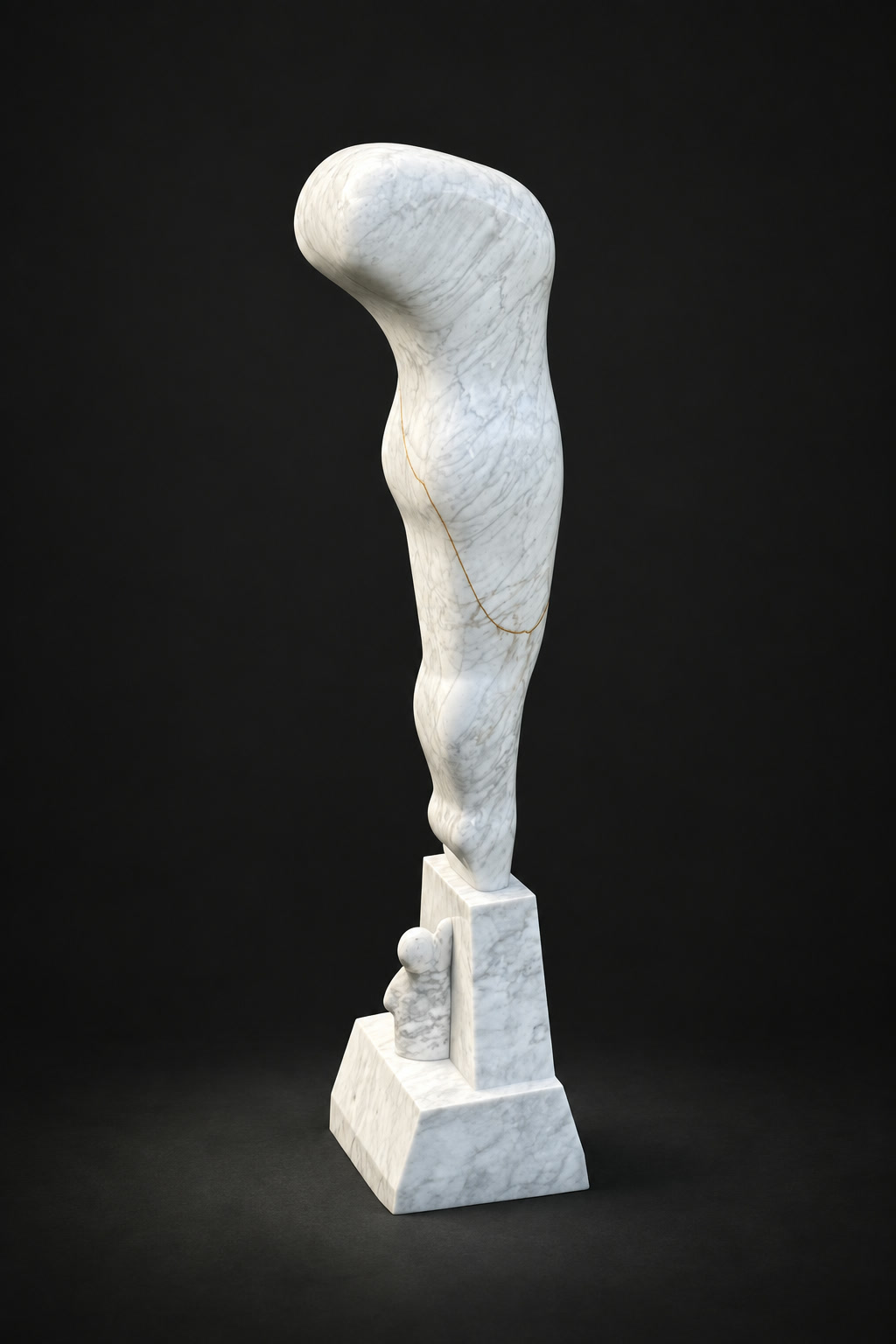
In the statue vs sculpture question, sculpture is the broad term for any three-dimensional work of art, while a statue is one particular kind: a free-standing figure, usually of a person or an animal. Every statue is a sculpture, but many sculptures are not statues. Reliefs, busts and abstract forms all belong to sculpture without being statues.
What counts as sculpture
Sculpture covers three-dimensional art made by carving, modelling, casting or assembling materials. It includes work in stone, wood, metal, clay, glass and found objects, at any scale, and it can be figurative or wholly abstract.
Relief sculpture, in which forms project from a flat background, is still sculpture even though it is not free-standing. So is an installation that fills a room, or a small carving that sits in the hand.
What makes something a statue
A statue is a free-standing sculpture that represents a person, an animal or a figure from myth, usually showing the whole figure. Statues are often life-size or larger, and many are made to commemorate someone or to stand in a public place.
A head-and-shoulders portrait is called a bust rather than a statue, and a very small figure is usually called a statuette or a figurine. The word statue therefore says something about both subject and form.
Statues have been made for thousands of years in stone, bronze, wood and other materials. Marble has long been among the most valued, for its fine grain and for the way it takes a polish.
Statue vs sculpture in everyday use
In everyday speech the words overlap, and many people search for marble statues when they mean sculpture for a home or garden. Garden statue tends to suggest a recognisable figure, often classical in style, while sculpture more often suggests an original work by a particular artist.
Neither word is a judgement of quality. Both simply describe what an object is. Listings often use the two interchangeably, so it is worth reading the description of a piece rather than relying on the label.
Where abstraction fits
Contemporary figurative sculpture often sits between the two words. A work can be clearly based on the human body yet abstracted, with parts left out so that stance and proportion carry the meaning. Such a piece is figurative, and it may be free-standing, but sculpture is usually the more accurate description.
Zak Stevens works in this way. His pieces are abstracted figures, often without head or limbs, carved by hand in marble, in which stance and proportion carry the work.
One work, two figures
Are You Looking Up shows why the distinction is useful. It is a tall female form in white marble with gold kintsugi, with a small companion figure at the back of the plinth looking up at her. She has a body but no head or arms. He has a head and arms but no body. They complete each other.
It is figurative and free-standing, so some might call it a statue. As a single composed work of two abstracted figures and a carved marble plinth, it is better described as a sculpture. The piece is in Bruton, Somerset, and is offered at £8,000.
Questions
Is a statue a sculpture?
Yes. A statue is a type of sculpture: a free-standing figure, usually of a person or animal. Sculpture is the wider category that includes it.
What is the difference between a statue and a monument?
A monument is anything made to commemorate a person or event, and it may or may not include a statue. A statue is defined by its form, a monument by its purpose.
What is a small statue called?
A small statue is usually called a statuette or a figurine. A head-and-shoulders portrait in the round is called a bust.
Is a bust a statue?
Not usually. A bust shows the head and shoulders, sometimes with part of the chest, while a statue normally shows the whole figure. Both are forms of sculpture.
Can an abstract sculpture be a statue?
Rarely in the usual sense, since a statue normally depicts a recognisable figure. Abstracted figurative work, such as Zak Stevens's, sits closer to sculpture.