The choice of marble vs bronze sculpture starts with how each is made: marble is carved away from a solid block, while bronze is usually cast in metal from a model, often in an edition. That single difference shapes how each looks, how it carries its weight, how it weathers, and what exactly you are buying.
Carved and cast
Marble sculpture is subtractive. The sculptor removes stone until the form appears, and every cut is final. The finished piece is a single original, shaped by the colour and veining of its particular block.
Bronze sculpture is usually modelled first in clay, wax or another soft material, then cast in metal, most often by the lost-wax process. A mould is taken from the model, a wax version is made from the mould, and the wax is melted out and replaced with molten bronze. Because the mould can be used again, bronzes are often produced in numbered editions. In marble, by contrast, the carved block is itself the finished work.
Strength, weight and form
Bronze is strong in tension, so it can hold outstretched arms, slender sections and dramatic overhangs. Marble is strong under compression but weaker in tension, so long unsupported projections risk breaking. This is one reason marble figures often keep their mass close to the body, and why many classical marble statues include supports such as tree stumps or drapery.
Bronze casts are usually hollow, so a bronze is often lighter than a solid marble piece of a similar size. Marble is heavy, and larger works need lifting equipment and a sound base.
Surface and light
Marble has a slight translucency: light enters the surface a little way before it is reflected, which gives polished white marble a soft glow and is one reason it has long been used for the human figure. Its colour and veining are natural and differ from block to block.
Bronze takes its colour from its patina, a surface layer that forms naturally over time or is applied with heat and chemicals. Patinas range from browns and blacks to greens, and outdoor bronze continues to change as it weathers.
Outdoors and care
Both materials can stand outside. Bronze is very durable outdoors, though its patina will alter and it is often waxed to maintain its appearance. Marble weathers slowly through rain and frost, losing polish first, and benefits from good drainage and gentle cleaning. Neither should be cleaned with harsh chemicals.
Indoors, the choice is more about character. White marble reads as cool, quiet and luminous, while bronze is darker and warmer in tone, with a surface that catches light more sharply where it is polished.
Marble vs bronze sculpture: which to choose
Bronze suits a slender, extended form, or a buyer for whom an edition is right. Marble suits someone who wants a single work carved by hand, with the weight, light and grain of natural stone. When weighing marble vs bronze sculpture for a particular setting, it is worth asking the maker about weight, base and siting.
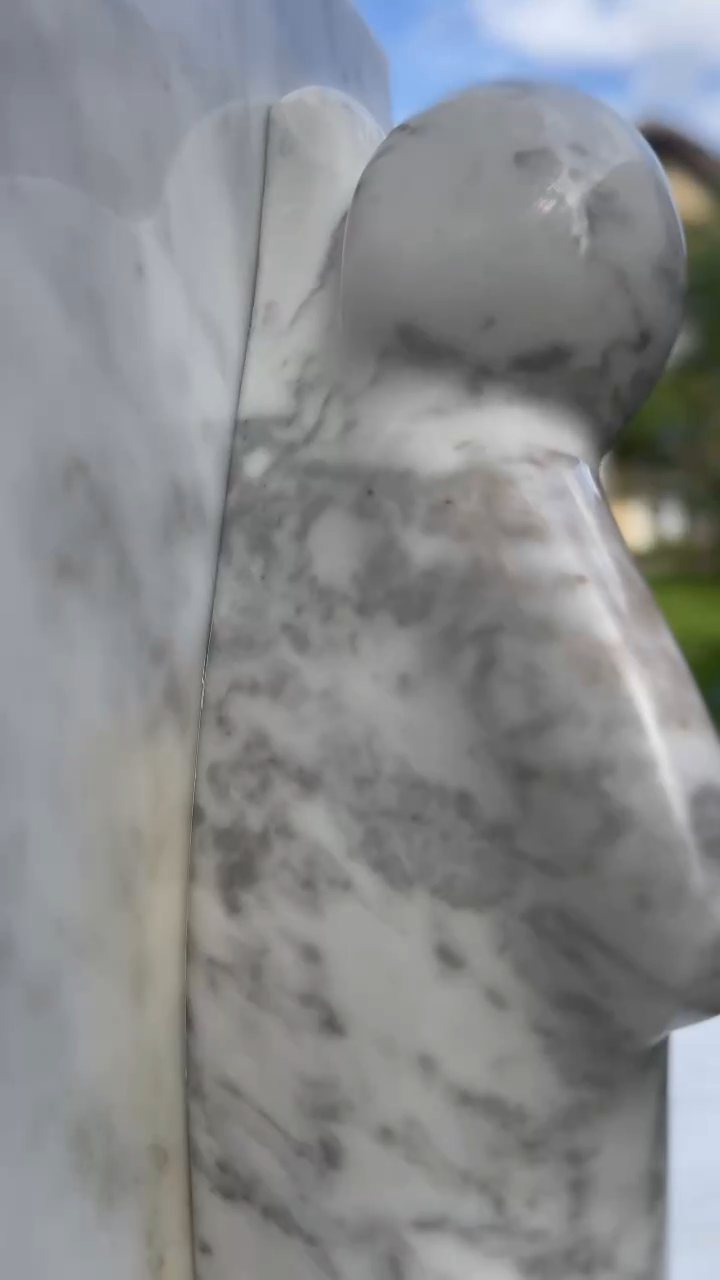
Zak Stevens is a sculptor working in marble. He carves the human figure by hand from a single block, and nothing is cast or moulded. His latest piece, Are You Looking Up, is white marble with gold kintsugi: a tall female form with a small companion figure at the back of the plinth, offered at £8,000.
Questions
Is marble or bronze more durable?
Both last a very long time. Bronze resists weathering well outdoors, while marble slowly loses its polish in rain and frost. Indoors, both are extremely long-lasting.
Is bronze sculpture more expensive than marble?
There is no fixed rule. Bronze carries the costs of modelling, mould making and casting; marble carries the cost of the block and many hours of carving. It is better to compare individual works than materials.
Why do marble statues have supports?
Marble is weak in tension, so projecting limbs can break under their own weight. Supports such as stumps or drapery carry the load, especially in large figures.
Can a marble sculpture be made in an edition?
Carved marble is usually unique. Copies can be carved or machined, but each is a separate piece of stone. Zak Stevens carves each figure by hand from a single block.