Kintsugi art is the Japanese practice of rejoining broken ceramics with lacquer and powdered gold, so that the lines of breakage stay visible rather than hidden. The name is usually translated as joining with gold. Over time the idea has travelled well beyond pottery, into contemporary art, design and sculpture.
Where kintsugi comes from
Kintsugi developed in Japan and is generally traced back several centuries. The word combines kin, meaning gold, and tsugi, meaning joining. It is closely associated with the culture of the tea ceremony, in which tea bowls were prized and handed down. A broken bowl was not discarded but rejoined, and the repair became part of its history.
The traditional method uses urushi, a natural lacquer made from the sap of the lacquer tree. The pieces are joined and any gaps built up with layers of lacquer, and the visible seams are then finished with gold powder. Related techniques use silver or other metals. Because each layer of lacquer must cure before the next, the work is slow.
The meaning behind the gold
Kintsugi is often linked with wabi-sabi, a Japanese aesthetic that finds beauty in imperfection, impermanence and the marks of time. Rather than disguising damage, kintsugi treats it as part of an object's story. The gold draws the eye to the line, and the object is valued for it.
This is why kintsugi has become a widely used image beyond craft: for the idea that what has happened to a thing need not be concealed, and can be honoured instead.
What is kintsugi art beyond ceramics
The traditional craft developed for ceramics. In other materials the word is used more loosely, for the principle rather than the exact method: a line, break or natural flaw is picked out in gold and left on show. Artists and designers apply that principle to glass, wood and stone, sometimes with traditional lacquer and often with modern materials.
Home kintsugi kits are now widely sold. Most use modern resins and metallic powders in place of urushi, which takes skill to handle and can irritate the skin. The look is similar, though the method and its durability differ from the traditional craft.
In sculpture, the effect works at two scales. From a distance a gold line reads as a thread of light running through the form; close to, it shows exactly where the material opened.
Can you kintsugi marble
Marble suits the principle well. Stone has natural veins and fissures, and where these open, gold can follow them and remain visible. The materials and methods differ from traditional ceramic kintsugi, and stone brings its own considerations, so the approach depends on the piece and on the maker.
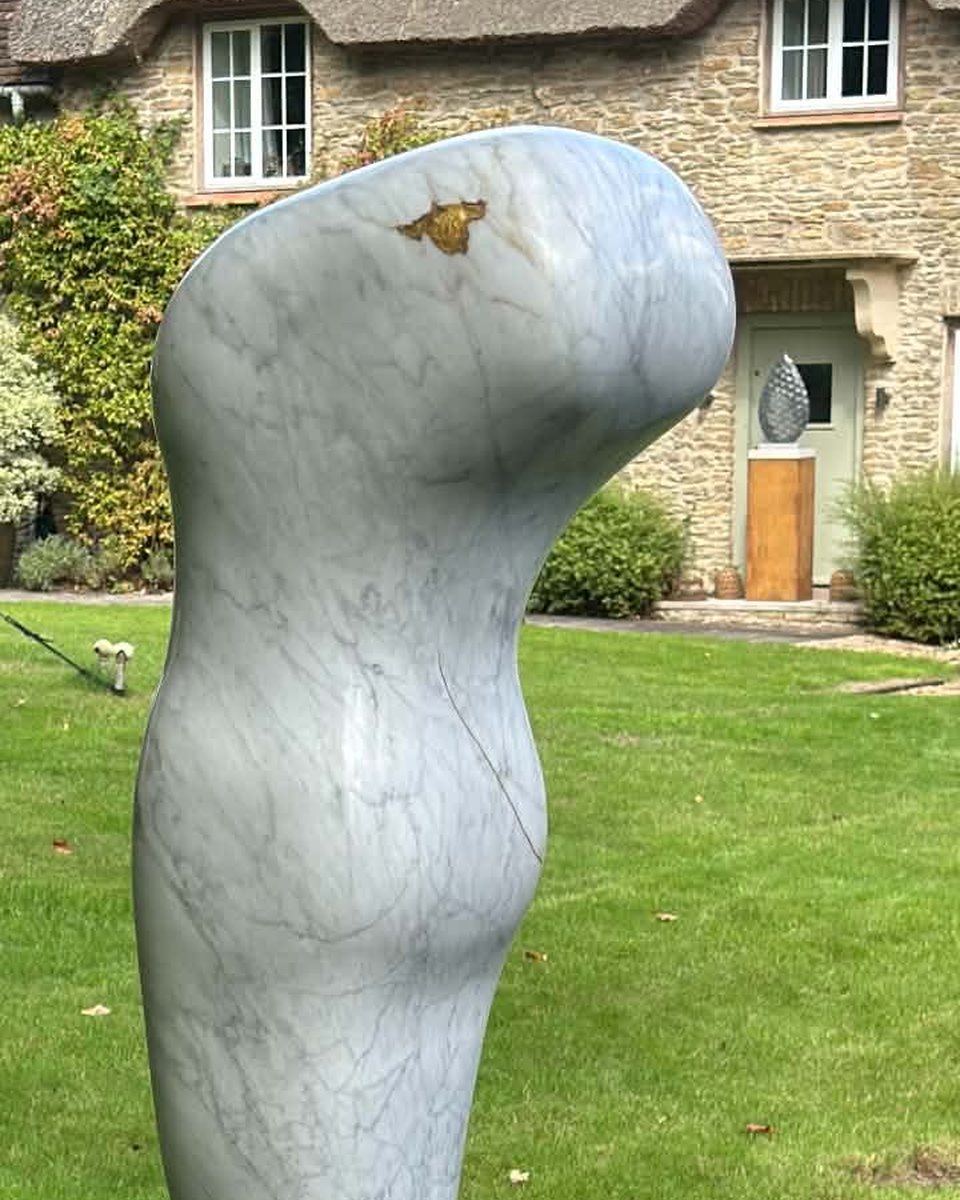
In Zak Stevens's Are You Looking Up, the stone opened along its natural veins. Where it did, Zak finished it in gold kintsugi, leaving the line visible as part of the piece. The gold follows the natural character of the block, so the line belongs to the stone.
Gold kintsugi in Zak's work
In the finished piece, gold sits at the crown, where the tall figure leans forward, and a fine gold line runs down the body. A small companion figure at the back of the plinth looks up at her. Carved by hand and finished in gold, the work is white marble on a carved marble plinth.
The piece is in Bruton, Somerset, and is offered at £8,000 with its plinth as a single work. To ask about the gold kintsugi or arrange a viewing, write to hello@zakstevens.art.
Questions
What does kintsugi mean?
Kintsugi is Japanese and is usually translated as joining with gold or golden joinery. It refers to rejoining broken ceramics with lacquer and gold so that the seams stay visible.
What is the philosophy of kintsugi?
It is commonly linked with wabi-sabi, which values imperfection and the passage of time. The gold line acknowledges what has happened to an object instead of hiding it.
Can you kintsugi marble?
Not in the strict traditional sense, which developed for ceramics, but the principle carries over to stone. In Zak Stevens's work, natural openings in the marble are finished in gold and left visible.
Is kintsugi real gold?
Traditional kintsugi uses real powdered gold over urushi lacquer, while some modern kits use imitation metallic powders. For the materials in a specific piece, ask the maker.